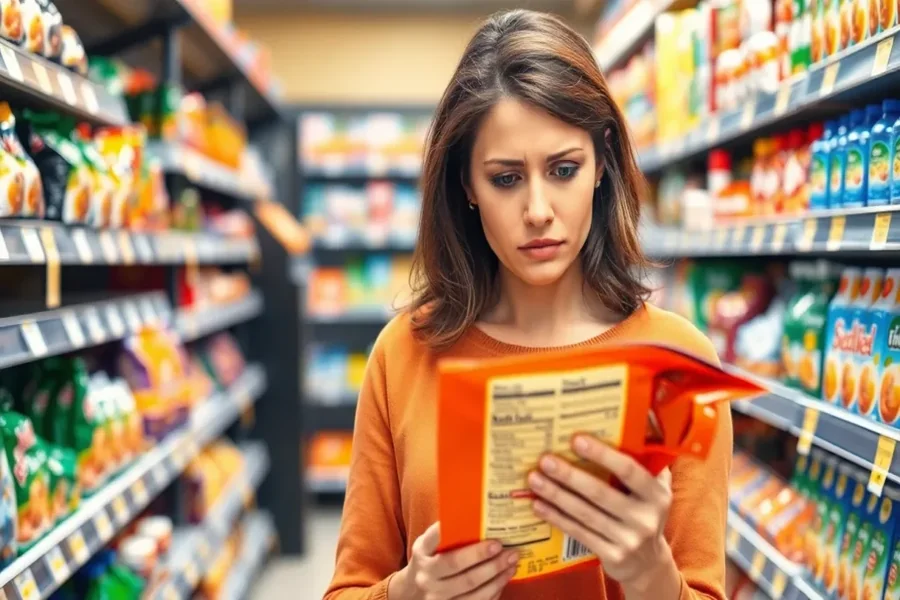
Why Flensutenol Should Not Be In Food English is an issue that poses crucial questions concerning the transparency of the ingredients of food safety and consumer protection. Society is now more conscious of the contents of the food they eat. They read labels and compare ingredients and research unknown names prior to making purchases. The very appearance of a chemical sounding word, such as Flensutenol, is a cause of concern.
Food is not just fuel. It influences health vigor and wellness in the long run. Any food ingredient has to be of high quality in terms of safety. It has to be tested assessed and out plainly. In the situation when people are not sure whether it is safe or not, people have the right to doubt its presence.
This paper discusses Why Flensutenol Should Not Be In Food English considering transparency issues of safety problems that the regulatory standards and consumer rights.
Getting a Picture of What Flensutenol Is Alleged to Be.
It is worth clarifying what is meant by the term Why Flensutenol Should Not Be In Food English before discussing the reasons this type of English must not be added to food. Currently Flensutenol has not been listed on any food safety authoritative list as an approved food additive. That alone raises questions.
Where a particular ingredient is not evident in both the scientific databases and regulatory documentation it brings about uncertainty. The consumers have the right to be aware of what they are consuming. Trust requires clear definitions and straight forward documentation.
The food additives are usually meant to accomplish certain functions that include preservation flavoring or texture. Any authorized additive is well researched. In case Flensitenol does not have approved research or regulatory standards that is a major problem.
The significance of Ingredient Transparency.
Among the key causes as to Why Flensutenol Should Not Be In Food English, there is one tied to transparency. The food labels should contain easy to understand information. In cases where an ingredient name is strange or where one can not find research an informed choice is not possible by the consumers.
Openness instills confidence between the producers and consumers of food. Without it suspicion grows. The laws of food labeling in most countries dictate that the ingredients should be posted in a clear manner and should be safe to eat. Often unidentified or inadequately documented materials compromise that principle.
Clean labels are appreciated by the consumers today. They desire familiar items as opposed to complicated chemical names that cannot be easily checked. In case Flensutenol is not explainable in simple terms then it should not be in daily food products.
Possible Health-related Problems And Unidentified Risks.
The most important consideration to the meaning of Why Flensutenol Should Not Be In Food English is health safety. The toxicology studies and allergen tests and long term impact research should be done on any substance that is introduced into food.
This cannot be proven to be safe because there is no data that can verify the safety of Flensitenol. The chemicals that are unknown may potentially lead to allergic reactions, digestive discomfort or other unintended consequences. Uncertainty is caused even by the absence of evidence of risk but insignificant risks.
In most countries, food safety authorities take a long time to conduct trials to approve additives. When a substance fails these tests it ought not to be introduced in the food supply. Health of the people should always be given the first priority.
Approval Processes, regulatory standards.
The other important aspect in Why Flensutenol Should Not Be In Food English is regulation. Food additives are supervised by the respective bodies in the U.S. and Europe like the U.S. Food and Drug Administration and European Food Safety Authority.
Such agencies need in-depth studies about the safety usage limits and possible side effects. Without the acceptance or authorization of the known regulatory organizations of Flensitenol, its use in food would be illegal and unethical.
Consumer protection is achieved by regulatory systems. It dilutes food safety systems by not following or skipping approval procedures. Unless proven safe, any ingredient, which does not conform with official standards, should be omitted.
Brand Responsibility Consumer Trust
Trust is a significant factor in the decisions of buying food. In the context of the argument Why Flensutenol Should Not Be In Food English the role of food manufacturers also should be addressed.
Loyalty is built due to honesty and quality in brands. There can be no introduction of unclear ingredients as it will hurt reputation. The loss of consumer confidence may also occur even with rumors about unsafe additives.
In the modern world, consumers tend to check the ingredients online. In case they are not able to find credible information concerning Flensutenol they might shun away products that contain it. Companies that are responsible are more focused on clarity and do not contain controversial substances.
The Clean Label Movement And Changing Expectations.
The clean label trend is an indication of shifting customer desires. Consumers like lists of ingredients which are familiar and have few ingredients. This change has direct connection to the Why Flensutenol Should Not Be In Food English.
Artificial additive and artificial sounding chemicals are now called into question. The buyers equate ease with security. Not every chemical name suggests a threat of unknown or unfounded terms cause unpredictability.
Competitive advantage is earned by food companies that respond to the trend of clean labels. Cutting on unnecessary additives enhances brand image and is in line with health conscious consumers.
Scientific Evidence Role in Food Safety.
Food safety policy is founded on scientific research. To have a reason as to why Flensutenol should not be served in the food English, it is of essence to analyze whether there are peer reviewed studies that are credible to defend the use of it.
Evidence based assessment embraces laboratory evaluation of human experimentation and protracted surveillance. No ingredient can be introduced widely without such data. Lack of open research implies that the society is unable to validate claims about safety.
Marketing strategies should not be the basis of decisions. Proper documentation will assure the consumers that the ingredients have a set standard.
Ethical Issues in Food Production.
Ethics are another concern that surrounds Why Flensutenol Should Not Be In Food English. Producers of food have a moral responsibility to put the wellbeing first before profit.
When an ingredient does not have obvious benefit or known safety it should not be included just in order to minimize costs or increase shelf life. Ethical production consists of using less harmful alternatives in case of uncertainty.
Consumers are assurances that whatever they buy is safe to them and their families. It is a delicate ingredient selection and integrity of communication that can guard that trust.
Final Thought
The focus of Why Flensutenol Should Not Be In Food English is on the issue of transparency and responsibility in the area of safety. Included in the food are any ingredients, which need to have a clear scientific evidence regulatory approval and open labeling practices.
Where a substance cannot be easily proved or elucidated it raises a question. Food is closely related to health and wellbeing. There can never be any doubt on what people are drinking every day.
Until Flensutenol has been fully defined, tested and proved by the relevant authorities then it is not to be allowed to be used in food items. The safety of the consumers and the safety of the health of people should always be the priority.
FAQs
What is Flensutenol in food?
There is no widely recognized scientific or regulatory documentation confirming Flensutenol as an approved food additive which raises concerns about clarity and safety.
Why is ingredient transparency important?
Transparency allows consumers to understand what they are eating and make informed decisions about their health and dietary choices.
Are all chemical sounding ingredients unsafe?
No. Many approved additives have scientific names but they are tested and regulated. The concern arises when a substance lacks verified approval or research.
Who regulates food additives?
Agencies such as the U.S. Food and Drug Administration and the European Food Safety Authority evaluate and approve food additives based on scientific evidence.
What should consumers do if they see an unfamiliar ingredient?
Research the ingredient consult reliable sources and consider contacting the manufacturer for clarification before consuming the product.