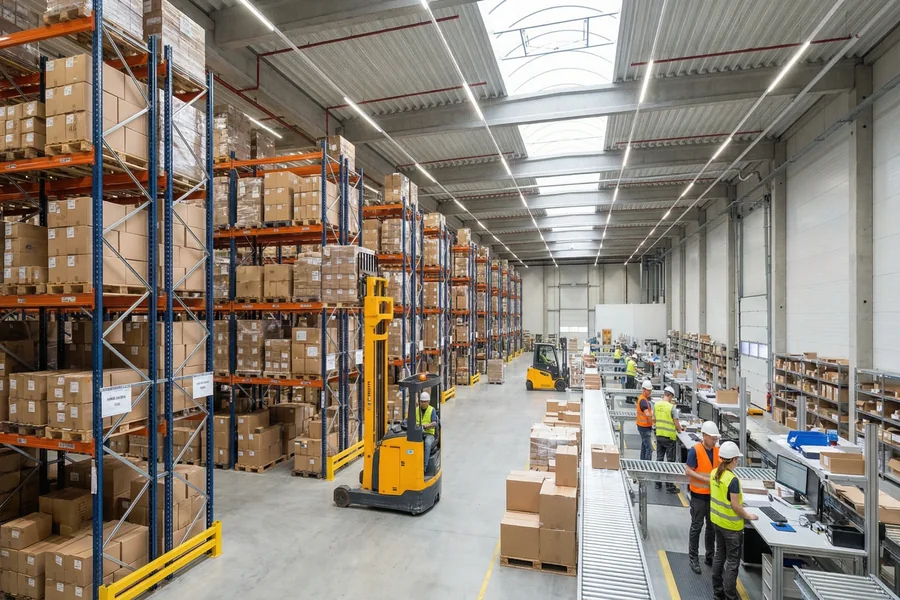
Warehouses are a critical component of modern supply chains, serving as hubs where goods are stored, sorted, and dispatched. The efficiency of warehouse operations directly impacts the overall productivity and profitability of businesses, making effective work organization essential. Proper organization in warehouses ensures that inventory management, order fulfillment, and logistical processes are streamlined, reducing errors and maximizing output.
Importance of Work Organization in Warehouses
Work organization in warehouses goes beyond just arranging shelves or labeling products. It encompasses the systematic planning of workflows, task allocation, staff management, and technology integration. The benefits of proper organization include:
- Enhanced Productivity: Structured workflows minimize wasted time, allowing staff to perform tasks efficiently. Clear procedures reduce the need for constant supervision and decision-making on the spot.
- Inventory Accuracy: A well-organized warehouse ensures that inventory is tracked accurately. This reduces stock discrepancies and prevents overstocking or understocking.
- Safety: Organized warehouses reduce the risk of accidents. Clearly defined pathways, proper storage methods, and safe handling practices contribute to a safer working environment.
- Customer Satisfaction: Efficient organization improves order accuracy and delivery speed, enhancing customer experience and reliability.
Principles of Warehouse Work Organization
Effective warehouse management relies on several key principles:
1. Layout Optimization
The physical layout of a warehouse has a profound impact on productivity. Common layout models include:
- U-Shaped Layout: Goods enter from one end, are processed in the middle, and shipped from the other end. This layout reduces congestion and streamlines material flow.
- Straight-Through Layout: Suitable for warehouses handling large volumes of uniform goods, where items move in a linear path from receiving to shipping.
- Modular Layout: Divides the warehouse into sections based on product types or operational functions, promoting organized storage and retrieval.
A strategic layout reduces travel time for staff and equipment, minimizes bottlenecks, and improves the overall flow of materials.
2. Zoning and Storage Management
Dividing the warehouse into functional zones improves organization. Common zones include:
- Receiving Area: Where incoming goods are checked, documented, and staged.
- Storage Area: Organized by product type, demand frequency, or size. High-demand items are placed closer to dispatch points for faster access.
- Picking Area: Where staff collect products to fulfill orders.
- Packing and Shipping Area: Where items are packed and labeled for delivery.
Storage techniques such as shelving, racking, and palletization help maximize space and maintain inventory integrity.
3. Standard Operating Procedures (SOPs)
SOPs provide detailed instructions for every task in the warehouse, from receiving shipments to handling returns. SOPs ensure consistency, reduce errors, and help train new employees efficiently. Common SOPs include:
- Proper lifting techniques to prevent injuries.
- Scanning and labeling protocols for inventory management.
- Step-by-step procedures for order picking, packing, and shipping.
4. Workforce Organization
The human element is central to warehouse efficiency. Assigning roles and responsibilities clearly ensures accountability and smooth operations. Key positions include:
- Warehouse Manager: Oversees operations, staff, and inventory accuracy.
- Inventory Controllers: Track stock levels and coordinate restocking.
- Pickers and Packers: Collect, pack, and prepare orders for shipment.
- Forklift Operators: Move heavy goods safely and efficiently. Regular forklift service is also essential to maintain equipment reliability and prevent delays in daily operations.
Rotating tasks and providing ongoing training enhances worker flexibility and morale.
5. Technology Integration
Modern warehouses increasingly rely on technology to maintain organization and efficiency. Key tools include:
- Warehouse Management Systems (WMS): Track inventory, manage orders, and optimize picking routes.
- Barcode and RFID Systems: Enable accurate tracking of goods and reduce manual errors.
- Automated Picking Systems: Reduce human labor and speed up order fulfillment.
- Robotics and AGVs (Automated Guided Vehicles): Transport goods within the warehouse efficiently, especially in large-scale operations.
Integration of technology allows real-time monitoring and data-driven decision-making, significantly improving organizational efficiency.
Strategies for Efficient Work Organization
To maximize warehouse performance, several strategies can be implemented:
1. ABC Inventory Classification
ABC classification organizes inventory based on value and turnover:
- A-items: High-value, fast-moving goods requiring frequent attention.
- B-items: Moderate-value, moderate-turnover items.
- C-items: Low-value, slow-moving items.
This method prioritizes resources and storage space for the most critical products, enhancing efficiency.
2. Cross-Docking
Cross-docking reduces storage time by directly transferring incoming goods to outbound shipments. This requires precise scheduling and coordination but minimizes handling and speeds up delivery.
3. Lean Warehousing
Lean principles focus on reducing waste, including excess inventory, unnecessary movement, and idle time. Key lean techniques in warehouses include:
- Just-in-time (JIT) inventory management.
- Optimized picking paths.
- Streamlined documentation and communication processes.
4. Continuous Improvement and Performance Monitoring
Key performance indicators (KPIs) such as order accuracy, picking speed, and inventory turnover provide insight into operational efficiency. Regular analysis allows managers to identify bottlenecks, implement improvements, and maintain high standards of organization.
Challenges in Warehouse Organization
While effective organization brings many benefits, warehouses face challenges, including:
- Fluctuating Demand: Seasonal spikes require flexible organization to handle increased workloads.
- Complex Inventory: Diverse product types and sizes complicate storage and picking.
- Workforce Turnover: Frequent staff changes necessitate continuous training and adherence to SOPs.
- Space Constraints: Limited physical space requires creative storage solutions and optimization strategies.
Addressing these challenges requires adaptive planning, investment in technology, and a strong focus on workforce management.
Conclusion
Work organization in warehouses is a multifaceted discipline that combines strategic layout design, clear operational procedures, skilled workforce management, and technology integration. When effectively implemented, it enhances productivity, ensures safety, reduces errors, and supports timely delivery of goods.
In today’s competitive business environment, where speed and accuracy are critical, a well-organized warehouse serves as a cornerstone for supply chain efficiency. Organizations that prioritize work organization in their warehouses can achieve significant cost savings, improve customer satisfaction, and maintain a robust and agile operational framework.
Ultimately, warehouse organization is not just about neat shelves or orderly racks—it is about creating a system where every process, every movement, and every decision is aligned to maximize efficiency, safety, and service quality.