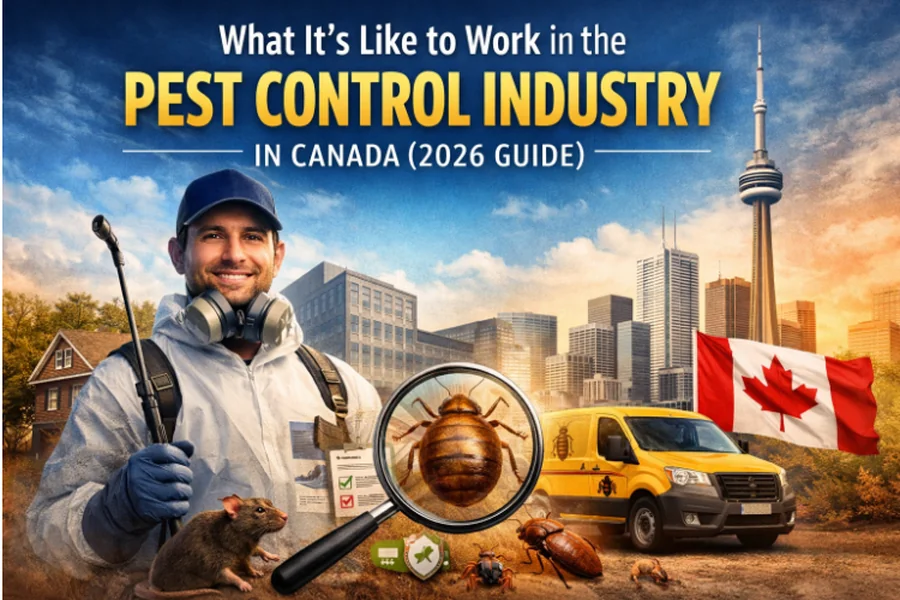
The pest control industry in Canada has quietly become one of the most stable and in-demand sectors in the home services space. While it may not be the first career path people think of, those working in this field often find consistent work, strong earning potential, and long-term growth opportunities.
So what’s it really like behind the scenes? Let’s break it down.
A Day in the Life of a Pest Control Technician
No two days are exactly the same — and that’s part of the appeal.
Most technicians start their day early, reviewing scheduled appointments and mapping out service routes. From there, it’s a mix of residential and commercial visits, dealing with everything from minor ant problems to more complex infestations like rodents or bed bugs.
You’re not just spraying and leaving — the job involves:
- Inspecting properties thoroughly
- Identifying the root cause of infestations
- Educating clients on prevention
- Applying treatments safely and effectively
It’s hands-on, practical work that keeps you moving.
Why Demand Is Growing Fast
Across Canada, demand for pest control services has been steadily rising — especially in major urban areas like Toronto, Montreal, and Vancouver.
A few key reasons:
- Increased urban density
- Climate changes affecting pest behavior
- More awareness around health and sanitation
- Growth in rental and multi-unit housing
Because of this, pest control companies are constantly hiring, and skilled technicians are rarely out of work.
In fact, many homeowners now rely on platforms like the ServiceQuotes pest control platform to connect with licensed professionals, which continues to drive consistent job flow across the industry.
Salary & Earning Potential
Let’s talk numbers — because that’s what really matters.
Entry-level technicians in Canada can expect to earn:
- $40,000 to $50,000 per year
With experience and certifications:
- $60,000 to $80,000+ annually
Many roles also include:
- Bonuses
- Commission structures
- Company vehicles
- Overtime opportunities
If you move into management or start your own operation, the earning potential goes even higher.
Training & Certification
You don’t necessarily need a university degree to get started — but you do need proper certification.
Most provinces require:
- Government-approved pesticide licensing
- Safety training (handling chemicals, environmental protection)
- On-the-job training with a licensed company
The good news? Many employers cover training costs and help new hires get certified quickly.
Pros and Cons of the Job
Like any career, pest control comes with its ups and downs.
Pros:
- High job security
- Steady demand year-round
- Opportunities for advancement
- Independence (especially in field roles)
Cons:
- Physically demanding work
- Exposure to pests and chemicals
- Seasonal peaks (busy summers)
- Customer-facing challenges
That said, many professionals in the industry find it rewarding — especially when helping people solve stressful situations in their homes.
Career Growth Opportunities
This isn’t just a job — it can turn into a full career.
Common paths include:
- Senior technician
- Supervisor or operations manager
- Sales specialist
- Business owner / franchise operator
With the right experience, some professionals even branch into consulting or commercial contracts.
Is Pest Control a Good Career in Canada?
Honestly? For the right person — yes.
If you enjoy hands-on work, problem-solving, and being on the move, pest control can offer a stable and well-paying career without the need for years of formal education.
It’s one of those industries that flies under the radar… but once you’re in, you realize just how essential it really is.
Final Thoughts
The pest control industry in Canada is growing, evolving, and full of opportunity. Whether you’re considering a career change or just exploring your options, it’s a field worth taking seriously.
Behind every service call is a real impact — helping families feel safe, businesses stay compliant, and communities remain healthy.
And that’s something you don’t always get from a typical 9-to-5.