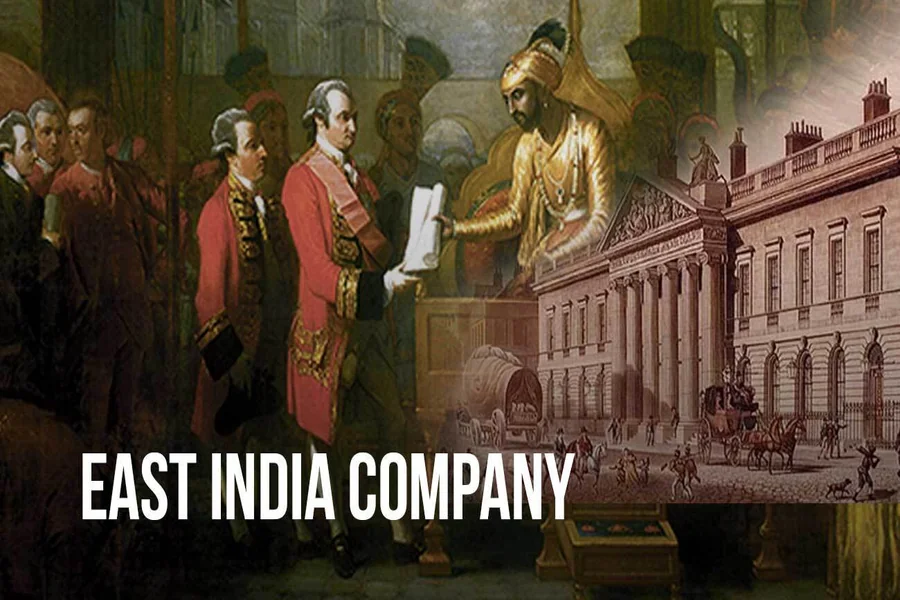
British has formed The East India Company to gain access and control of riches in Asia and control of access to the precious commodities. Later European countries of the late sixteenth century competed fiercely in dominating the trade routes across the world. Silk cotton tea and other commodities were produced on a large scale, and their profits were huge. England desired to have a more formidable presence in this growing business world. The foundation of one of the most effective trading companies was the turning point in both the British and world history.
The East India Company was granted a royal charter by Queen Elizabeth I in the year 1600. This charter granted the English merchants monopoly in trade with the East Indies areas. By the time the Dutch and Portuguese had already seized large shares of the maritime trade. Britain wanted to compete with that supremacy and gain its own economic development.
Initial Reasons why The Company was founded.
The East India Company was formed by the British to get spices like pepper cloves and nutmeg that had high demand in Europe. Spices were used to conserve food and were associated with affluence. The domination of these goods was huge profit margins.
Other than spices, the company also wanted silk cloths and tea later. The Asian markets were selling the kind of products that the European consumers were strongly desiring. Direct trade minimized the reliance on European competitors. The company form enabled the investors to combine resources and the risks that made long distance journeys economically viable.
Entry into The Indian Subcontinent.
Gradually the company became oriented towards India. First access to trade was restricted by the Mughal rulers. The company opened trading posts in Surat Madras and Calcutta cities. The company slowly increased its influence in the region as political instability increased in the region.
What started as a means of trade turned into the domination of areas. The officials of the companies organized their own armies and negotiated treaties. Following the Battle of Plassey in 1757 the company was very powerful in Bengal. Economic desire was changed into political power which re-defined the Indian subcontinent.
Economic Impact On Britain
The East India Company was established by the British to gain trade wealth and it managed to boost the economy of Britain. Consumer markets were stimulated by the imports of tea cotton and spices. The national income was added with taxes and trade revenues.
London also emerged as a financial hub with investors buying shares in companies. Modern corporate structures were motivated by the joint stock model. Britain was enjoying economic benefits, which facilitated industrialization and building the navy. The profit of trade was used to finance infrastructure and military projects.
India and Asia Consequences.
As Britain was becoming wealthy, the effects on India were numerous and usually devastating. The local economies were destroyed by heavy taxation and extraction of resources. The British imports of industries like hand woven textiles led to the decline of the traditional industries.
Instability was enhanced by political interference. Policies in the company also led to economic hardships such as famines. Resentment among people living in the area increased with time. Company power was put into question in 1857 with the Indian Rebellion. Following this revolt the British government abolished company rule and put in place direct rule called the British Raj.
Company to Company to Crown Rule.
The East India Company ruled over large regions over two centuries. The position was taken over by the Crown however, following the rebellion of 1857. The company no longer operated as a governing body despite the fact that it was still powerful in trade up to a limited time.
The revolution signified the corporate rule was obsolete and the rise of formal colonial government. This political change defined the world geopolitics and strengthened British imperialism in South Asia.
Legacy In Modern History
The East Indian Company was founded by the British To gain commercial privilege but it has a lot more to do with its history than just that. It had an impact on the policy of corporate governance colonial and international relations. The company showed the impact of governmental power in the hands of the private enterprise.
Its history also poses ethical concerns of economic control of exploitation and imperialism. Contemporary discourses of globalization and corporate responsibility commonly make references to the company era. This history can be used to understand the existing economic and political relations between Britain and South Asia.
Final Thought
The East India Company was also established by the British to trade in wealth routes and strategic power in Asia. What started as a business project turned out as one of the key drivers in the world history. The company molded economies had changed political structures and changed cultural landscapes. Its emergence depicts the strong bond existing between trade and empire. The lesson of its downfall is that corporate governance has its limits and the human price of uncontrolled growth. The analysis of this part of history can help to understand the background of the modern trade systems and the legacy of the colonial policies on the countries up to this time.
FAQs About The British Established The East India Company To Acquire
Why did Britain create the East India Company
Britain formed the company to gain direct access to valuable Asian goods and compete with European rivals in global trade.
When was the East India Company established
It was established in 1600 under a royal charter granted by Queen Elizabeth I.
What goods did the company trade
The company traded spices silk cotton tea and other valuable commodities from Asia.
How did the company gain political power in India
Through military victories alliances and treaties the company expanded its influence and eventually controlled large territories.
What ended the company rule in India
The Indian Rebellion of 1857 led the British government to dissolve company rule and assume direct control.
Did the company benefit Britain economically
Yes. Trade profits strengthened Britain’s economy and supported industrial and naval growth.
Why is the East India Company historically important
It played a major role in shaping global trade colonial expansion and early corporate governance structures.