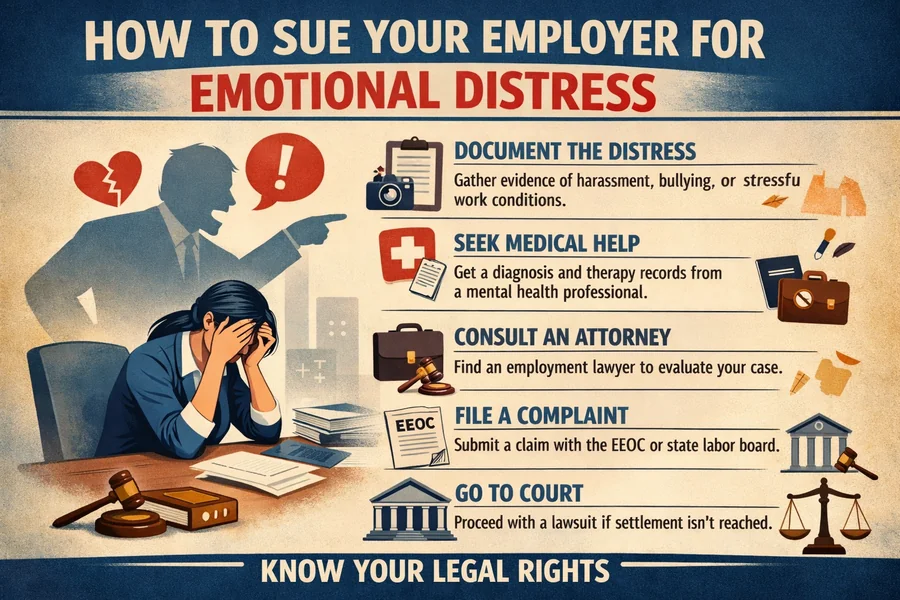
How To Sue Your Employer For Emotional Distress, When a job causes severe pain which is highly emotional it may impinge on sleep health trustworthiness and everyday life. Lots of employees are caught in an entrapment when stress becomes detrimental. Learning how to sue your boss due to the emotional distress would provide you with the way out. This manual is provided in easy to understand language. It is concerned with preparation evidence, real expectations. The variations in the laws are place based, but the fundamental concepts remain the same. It is meant to get you to know what you have to choose and make a better choice.
Understanding How to Sue Your Employer for Emotional Distress
Suffering in the workplace can be festered with time. It could begin with pressure and then develop into fear shame and unrelenting anxiety. There are individuals who undergo disgrace in the community. Others are related to threats or injustice of punishment. Others are harassed or discriminated. Once this damage is severe and is connected to the actions of an employer, it can be the foundation of a lawsuit.
The courts tend to seek behavior that exceeds beyond the normal workplace conflict. An ugly day or unpleasant remark seldom happens to the mark. In emotional distress cases, there is usually extreme behavior. This can be manifested in the form of continued harassment retaliation following the reporting of a problem or intentional acts to harm. The distress must be real. It ought to influence day-to-day operations. This can be supported by medical visits therapy notes or by work performance changes.
There are two common paths. One is actual intentional tort in causing emotional distress. This is a contention that the employer did something that was intended to result in harm or that he/she knew that he/she was likely to cause harm. The other is negligent emotional distress. This is concerned with negligent actions that resulted in severe emotional harm. The knowledge of these concepts can put into perspective the ways to sue your employer on the grounds of emotional distress.
Legal grounds for suing your employer
A good case is one that is founded on well-grounded legal grounds. Several claims of emotional distresses relate to other laws of the workplaces. A claim can be supported by discrimination on the basis of the traits that are safeguarded. It may also be harassment that leads to a hostile work environment. Another typical premise is retaliation following reporting of misconduct.
Emotional distress is not normally supported by wage issues only. However, in case where wage theft was accompanied by threats or humiliation it might help. It might also be a factor when the fear and anxiety are the expected outcomes of unsafe working conditions. In other cases wrongful termination incorporates emotional damage in the instance in which the procedure entailed public disgrace or defamation.
Courts look at the existence of a duty of care on the part of the employer. They determine whether such duty has been violated. They seek an association between the behavior and the suffering. They are also obligated to have evidence of injury. Knowing how to sue your employer because you were emotionally distressed is to make your story fit these elements.
There are places where emotional distress claims are capped under the circumstances of workers compensation. There, you might have to demonstrate a behavior that is not in the ordinary risks of the job. Components of employment law Local rules can be clarified by an employment lawyer. They will also inform you when your case is more preferable under the discrimination law or tort law.
Steps to prepare before taking action
Results are usually determined by preparation. Begin by making a written record of events. Record timings places parties and conversation. Keep this record updated. Archive email messages and performance reviews. Do not alter documents. Store copies in a safe place.
Consult medical/mental health assistance. This will assist in your health and leave a documentation. Symptoms can be described by a doctor or therapist, and work made a contribution. The duration and the seriousness can be reflected in their notes.
Playing by internal channels is safe. Send problem reports to management or human resources. Follow company policy. Keep proof of reports. This indicates that the employer was in notice. It can also cause retaliation protection. You should seek legal advice before you engage in internal reporting in a manner that would predispose you to danger.
Early seek the advice of employment attorney. Many offer initial reviews. They are able to gauge on strength and risks. They can explain deadlines. These are time constraints that may be brief. Missing them can end a case. A lawyer also gives the guidance on suing your employer in case of emotional distress without the destruction of other claims.
Do not talk about the case in the workplace or in the internet. Casual posts can be misread. They can be used against you. Make communications business-like and restrained.
How to file a lawsuit for emotional distress
It starts with identification of the correct forum. Other assertions begin with an agency charge. Others go straight to court. A complaint will be drafted by your lawyer. This is a document stating the person being sued and why. It enumerates realities and theories of law. It asks for damages.
Upon filing the employer is served. They react with a response or movement. The case then proceeds to discovery. This stage involves sharing of information. You may give written answers. You may sit for a deposition. The employer also has to generate records. Patterns are frequently shown by discovery.
Experts can play a role. You may be assessed by a professional in mental health. They are able to testify in regard to diagnosis and impact. Economic professionals can approximate lost revenue. These views are in favor of damages.
There are numerous out-of court settlement cases. Both parties can use mediation to risk assess. Assuming the failure of settlement will subject the case to trial. Evidence is heard by a judge or a jury. They determine damages and liability. Knowing how to sue your employer on emotional distress involves knowing such a timeline. It can take months or longer.
Along the way go with your attorney. Attend appointments. Be honest. Credibility is achieved through consistency.
What to expect during the process
The cases of emotional distress may be hectic. You can go through some painful moments. Depositions may turn personal. Trials can be stressful. Support systems matter. It may be assisted by therapy and friends who are trusted.
Outcomes vary. Policy changes or training are the final outcomes of some cases. Others result in financial rewards. Damages can contain the medical expenses, wages lost and compensation of pain and suffering. Punitive damages are scarce and they rely on outrageous behavior.
The employers tend to defend these claims. They can claim that the behavior was a normal management. They can doubt the seriousness of injury. This is the reason why documentation is important. Recurrent documents and eyewitness testimonies fortify your case.
Settlement may have confidentiality terms on you as well. Get to know them prior to signing. Enquire about their implications on future employment. Explain references and employment position.
This is not just about court, learning how to sue your employer on emotional distress. It is concerned with the security of your health and rights. Others opt to take other paths like agency complaints. There are those that are exit and recovery oriented. All options can be described by a lawyer.
Final Thought
Having the knowledge on how to sue your employer when emotionally distressed empowers the victimized workers. The path is not simple. It demands preparation sincerity and encouragement. Focus first on your health. Build records. Seek guidance early. The amount of emotional damage that was done and that it is serious can be affirmed by the way your case has settled or has proceeded to court. Your experience matters. Your well being matters. Making informed actions can make you go forward clearly and powerfully.
FAQs
What qualifies as emotional distress at work?
Emotional distress refers to serious mental suffering. It can include anxiety depression panic or trauma linked to employer actions. It must be more than everyday stress. It should affect normal life.
Do I need medical proof?
Medical proof is not always required but it helps. Records from doctors or therapists show severity and connection to work. They often strengthen claims.
How long do I have to file?
Deadlines vary by location and claim type. Some are months. Others allow more time. Speak with a lawyer quickly to avoid missing a deadline.
Can I sue while still employed?
Yes it is possible. Many workers file while still working. Laws often protect against retaliation. Still consider safety and timing with legal advice.
What damages can I recover?
Possible damages include treatment costs lost income and compensation for suffering. In rare cases punitive damages may apply. The amount depends on proof and law.
Is it expensive to sue?
Costs vary. Some lawyers work on contingency. That means fees come from a recovery. Ask about costs at the start.
Do I need a lawyer?
You can file on your own but emotional distress claims are complex. A lawyer helps gather evidence meet deadlines and present your case clearly.